Vegan and Vegetarian Dining in Koreatown LA
2026-03-17 · The RFC Group
Vegan and Vegetarian Dining in Koreatown LA
Koreatown is known for sizzling Korean BBQ, bubbling stews loaded with pork belly, and banchan platters where fish sauce and shrimp paste hide in unexpected places. For plant-based eaters, that reputation can feel like a wall. But the reality on the ground is different. Koreatown has quietly become one of the best neighborhoods in Los Angeles for vegan and vegetarian dining, with over 127 vegan-friendly restaurants listed on OpenTable alone. Living at 856 S Gramercy Dr puts you in walking distance of plant-based options that range from dedicated vegan kitchens to traditional Korean restaurants with surprisingly deep vegetable-forward menus.
This guide covers the best of all of it — fully vegan spots, vegetarian-friendly Korean restaurants, temple food traditions, plant-based BBQ alternatives, and the juice bars and smoothie shops that keep the neighborhood fueled.
Dedicated Vegan and Vegetarian Restaurants
Monty's Good Burger
Monty's Good Burger is a women-owned, fully plant-based burger chain that has earned a loyal following across Los Angeles, and their Koreatown location is one of the most popular. The menu centers on Impossible patties served on soft brioche buns with vegan cheese, house-made sauce, and perfectly crispy fries. What makes Monty's stand out beyond the food is the atmosphere — it has the energy of a late-night fast food spot without the guilt. The Asian-fusion specials rotate seasonally and often incorporate Korean flavors like gochujang aioli and pickled daikon. Open late, which makes it a go-to after a night out in the neighborhood.
The Grain Cafe
The Grain Cafe has been a quiet anchor for vegetarian and vegan diners in Koreatown for years. The menu spans breakfast bowls, grain-based entrees, fresh salads, and smoothies. Everything is made from scratch with organic ingredients wherever possible. The acai bowls are a neighborhood favorite, and the avocado toast holds its own against any brunch spot in the city. The space itself is calm and sunlit, a welcome contrast to the sensory overload of the surrounding blocks. It is also one of the better spots for remote work if you need a plant-based lunch and a quiet table.
Jummee's BLISS Kitchen
Jummee's BLISS Kitchen is a fully vegan restaurant that specializes in comfort food with global influences. The menu rotates but consistently features hearty bowls, wraps, and plates that leave you full without feeling heavy. Portions are generous and prices are reasonable by LA standards. This is the kind of place where a skeptical omnivore might be converted — the flavors are bold enough that you forget you are eating plant-based.
Samata Vegan House
For vegan Korean food specifically, Samata Vegan House is the closest thing Koreatown has to a dedicated plant-based Korean kitchen. The menu draws on traditional Korean recipes and rebuilds them without animal products. Think tofu-based stews, vegetable bibimbap with gochujang, mushroom bulgogi, and japchae made with sesame oil and a rainbow of vegetables. If your concern is "can I eat Korean food as a vegan," Samata answers that question definitively.
Vegetarian-Friendly Korean Restaurants
One of the underappreciated facts about Korean cuisine is how much of it is already vegetable-centered. Banchan — the small side dishes served with every meal — often include seasoned spinach, pickled radish, braised tofu, stir-fried zucchini, and of course kimchi (though traditional kimchi typically contains fish sauce or shrimp paste, so ask your server). Many Korean restaurants in Koreatown will accommodate vegetarian requests if you communicate clearly.
Bibimbap and Rice Bowls
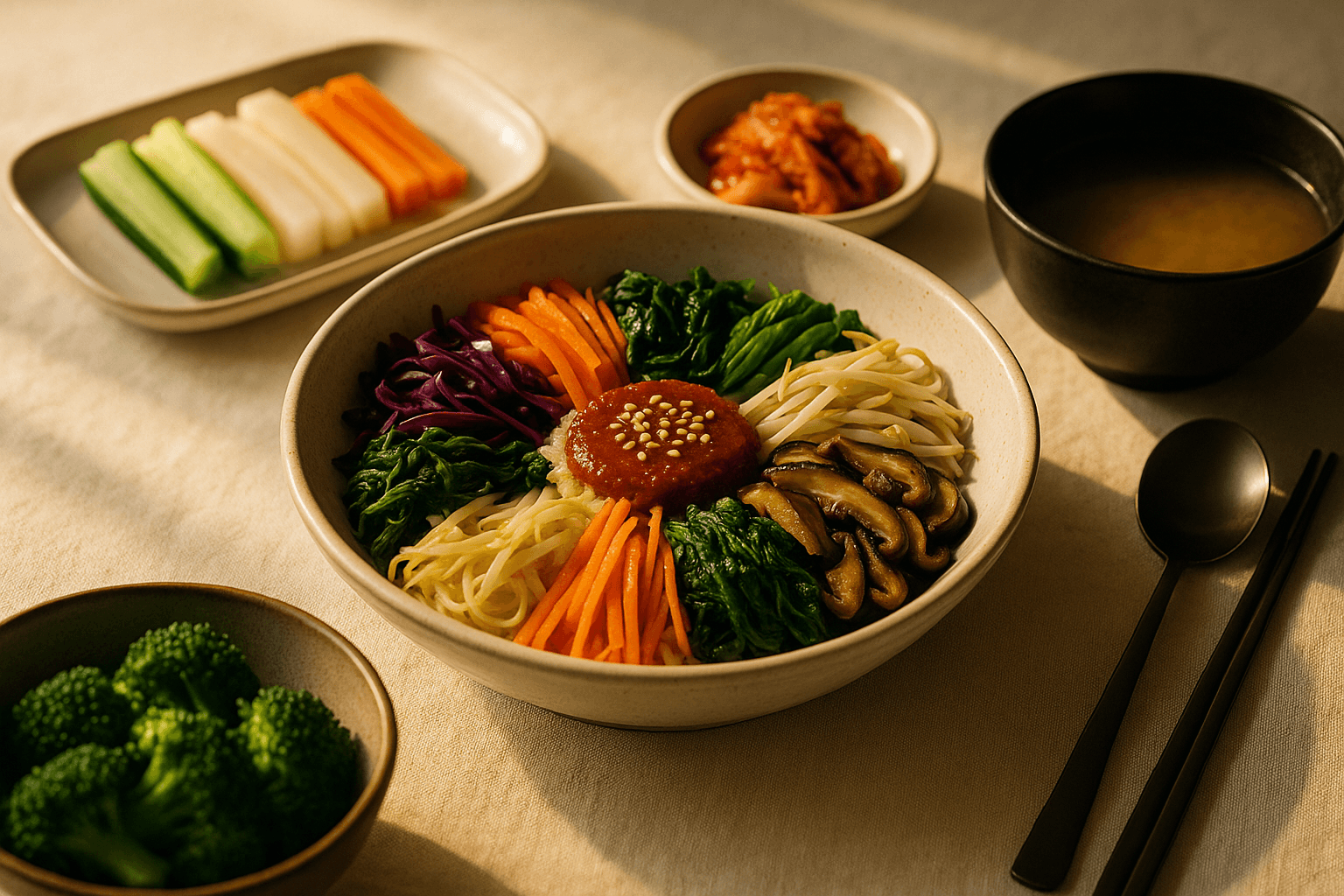
Several Korean restaurants along 6th Street and Olympic Boulevard serve bibimbap that can be ordered vegetarian. A stone pot bibimbap (dolsot bibimbap) loaded with sauteed vegetables, a fried egg (or without, for vegans), and gochujang over crispy rice is one of the most satisfying vegetarian meals in any cuisine. Look for restaurants that offer mushroom or tofu as protein substitutes.
Tofu Stew Specialists
Beverly Soon Tofu on Vermont Avenue is famous for its soft tofu stew, and while most versions contain meat or seafood, the vegetable soon tofu option is deeply flavorful on its own. The bubbling pot arrives at your table with a complimentary egg and rice. Ask for the stew without the egg to keep it fully vegan. The rich, spicy broth is made with enough chili and sesame to carry the dish without animal stock.
Korean Temple Food Tradition
Korean Buddhist temple food, known as sachal eumsik, is an entirely plant-based culinary tradition that predates modern veganism by centuries. Temple food avoids meat, fish, and the five pungent vegetables (garlic, onion, scallion, chives, and leeks) to promote clarity of mind. While no dedicated temple food restaurant currently operates in Koreatown proper, the tradition deeply influences many Korean vegetable dishes you will find on menus throughout the neighborhood. Dishes like hobakjeon (pan-fried zucchini), dubu jorim (braised tofu), and various namul (seasoned wild greens) trace their roots directly to temple kitchens.
Plant-Based BBQ Alternatives
The biggest question plant-based eaters ask about Koreatown is whether they can participate in the Korean BBQ experience. The answer is yes, with some creativity.
Vegetable Grilling at Traditional BBQ Restaurants
Most Korean BBQ restaurants in Koreatown offer vegetable platters that can be grilled on the same tabletop setup as the meats. King oyster mushrooms, sliced zucchini, sweet potato, corn, garlic cloves, and leafy greens like perilla leaves all cook beautifully over charcoal or gas grills. At all-you-can-eat spots like HaeJangChon and Moohan, vegetable sides are included with every order, and you can request extra servings.
The key is to ask for a separate grill grate or to be seated at a clean grill if cross-contamination is a concern. Most restaurants will accommodate this request during off-peak hours.
Mushroom-Based Alternatives
Several Koreatown restaurants now offer mushroom-based dishes that mimic the texture and umami of grilled meat. King oyster mushroom steaks, shiitake bulgogi, and grilled portobello caps dressed in Korean marinades provide a satisfying alternative. These are not always listed on English-language menus, so asking your server about vegetable or mushroom options can unlock dishes you would otherwise miss.
Juice Bars and Smoothie Shops
Koreatown's juice and smoothie scene has grown significantly over the past two years, driven by the same health-conscious demographic that supports the neighborhood's yoga studios and Pilates classes.
Naturewell Juice Bar
Naturewell is a no-frills juice bar chain with a Koreatown-adjacent location that serves cold-pressed juices, acai bowls, and smoothies made to order. The green juices use kale, spinach, cucumber, and ginger in combinations that are genuinely refreshing rather than punishing. Prices are reasonable for cold-pressed juice in LA.
Cafe and Smoothie Spots
Several of Koreatown's popular cafes have expanded their menus to include plant-based smoothies and health-focused drinks. About Time on Wilshire Boulevard serves an excellent corn latte alongside vegan-friendly snacks. Memory Look, a plant-filled cafe on 6th Street, offers matcha lattes with oat milk and light vegetarian bites. These spots double as study-friendly workspaces, making them ideal for a midday fuel stop.
Korean Grocery Stores for Plant-Based Cooking
Living plant-based in Koreatown becomes much easier once you discover the grocery options. H Mart at Madang Plaza stocks an enormous selection of fresh tofu (soft, firm, extra firm, and silken), mushrooms in varieties you will not find at conventional supermarkets, fresh vegetables including Korean specialty greens, and an entire aisle of plant-based Korean condiments. Koreatown Galleria Market on Olympic Boulevard carries imported vegan kimchi, ready-made vegan banchan, and a selection of rice cakes and dumpling wrappers for home cooking.
Stocking your kitchen with doenjang (fermented soybean paste), gochugaru (Korean chili flakes), sesame oil, and rice vinegar gives you the building blocks for dozens of plant-based Korean dishes.
Nearby Upscale Vegan Dining
When you want to venture slightly beyond Koreatown for a special occasion, two restaurants stand out.
Crossroads Kitchen — West Hollywood
Chef Tal Ronnen's Crossroads Kitchen in West Hollywood is widely considered one of the best vegan restaurants in the country. The Mediterranean-inspired menu features dishes like artichoke oysters, truffle cream pasta, and a burger that has converted many a carnivore. A short rideshare from 856 Gramercy, Crossroads is worth the trip for date nights and celebrations.
Baroo — Arts District
Baroo in the Arts District offers a plant-based Korean tasting menu priced at $125 that showcases the depth and sophistication of Korean vegetable cookery. Fermentation plays a central role, with house-made pickles, pastes, and vinegars layering complexity into every course. It is one of the most innovative dining experiences in Los Angeles and a must-visit for anyone who believes plant-based food cannot be exciting.
Tips for Eating Vegan in Koreatown
A few practical notes for navigating Koreatown's restaurant scene as a vegan or vegetarian.
First, always ask about anchovy stock and fish sauce. Many Korean soups and stews that appear vegetarian are made with anchovy-based broth. Some restaurants offer alternatives, but it is not universal.
Second, learn a few Korean phrases. "Chaesik" means vegetarian, and "gogi eobsi" means without meat. These go a long way with servers at traditional restaurants.
Third, check for hidden dairy. Korean bakeries and cafes frequently use butter and milk in pastries and bread. If you are strictly vegan, confirm ingredients before ordering.
Fourth, embrace banchan. The small dishes served at the start of every Korean meal often include three or four fully vegan options — seasoned bean sprouts, pickled radish, marinated tofu, and stir-fried vegetables. These alone can make a satisfying light meal.
Living Plant-Based at 856 Gramercy
Koreatown's density means that within a ten-minute walk of 856 S Gramercy Dr, you have access to dedicated vegan restaurants, vegetarian-friendly Korean kitchens, juice bars, and some of the best produce markets in the city. The building's modern amenities include kitchen spaces where you can prepare meals with ingredients picked up from H Mart that afternoon.
The neighborhood's Walk Score of 93 means you can hit multiple spots in a single outing without needing a car — grab a cold-pressed juice on the way to the office, pick up tofu and mushrooms at the market on the way home, and walk to dinner at any of the restaurants listed above.
Plant-based living in Koreatown is not a compromise. It is a lifestyle with more options than most people realize.
Schedule a tour of 856 Gramercy and see what it is like to live in the heart of one of LA's most exciting food neighborhoods — no matter how you eat.
Looking for an apartment in Koreatown?
Explore available units at The Gramercy — new luxury apartments with modern amenities.
View Available Units