Korean Grocery Stores and Markets in Koreatown — Shopper's Guide
2026-03-17 · The RFC Group
Korean Grocery Stores and Markets in Koreatown — Shopper's Guide
Grocery shopping in Koreatown is a fundamentally different experience from what most Americans are accustomed to. The stores are larger, the product range is broader, and the prepared food sections rival full-service restaurants. A trip to H Mart or Galleria Market is not just a chore — it is an immersive experience that introduces you to ingredients, flavors, and food traditions you will not find at a conventional supermarket.
For residents of 856 S Gramercy Dr, these markets are within walking distance, which means stocking your kitchen never requires a car or a delivery app.
H Mart — Madang Plaza, 621 S Western Ave
H Mart is the anchor of Koreatown's grocery landscape. The Madang Plaza location is the flagship store, and it is enormous — aisles upon aisles of Korean, Japanese, Chinese, and Southeast Asian ingredients organized with a logic that rewards repeat visits.
The Produce Section
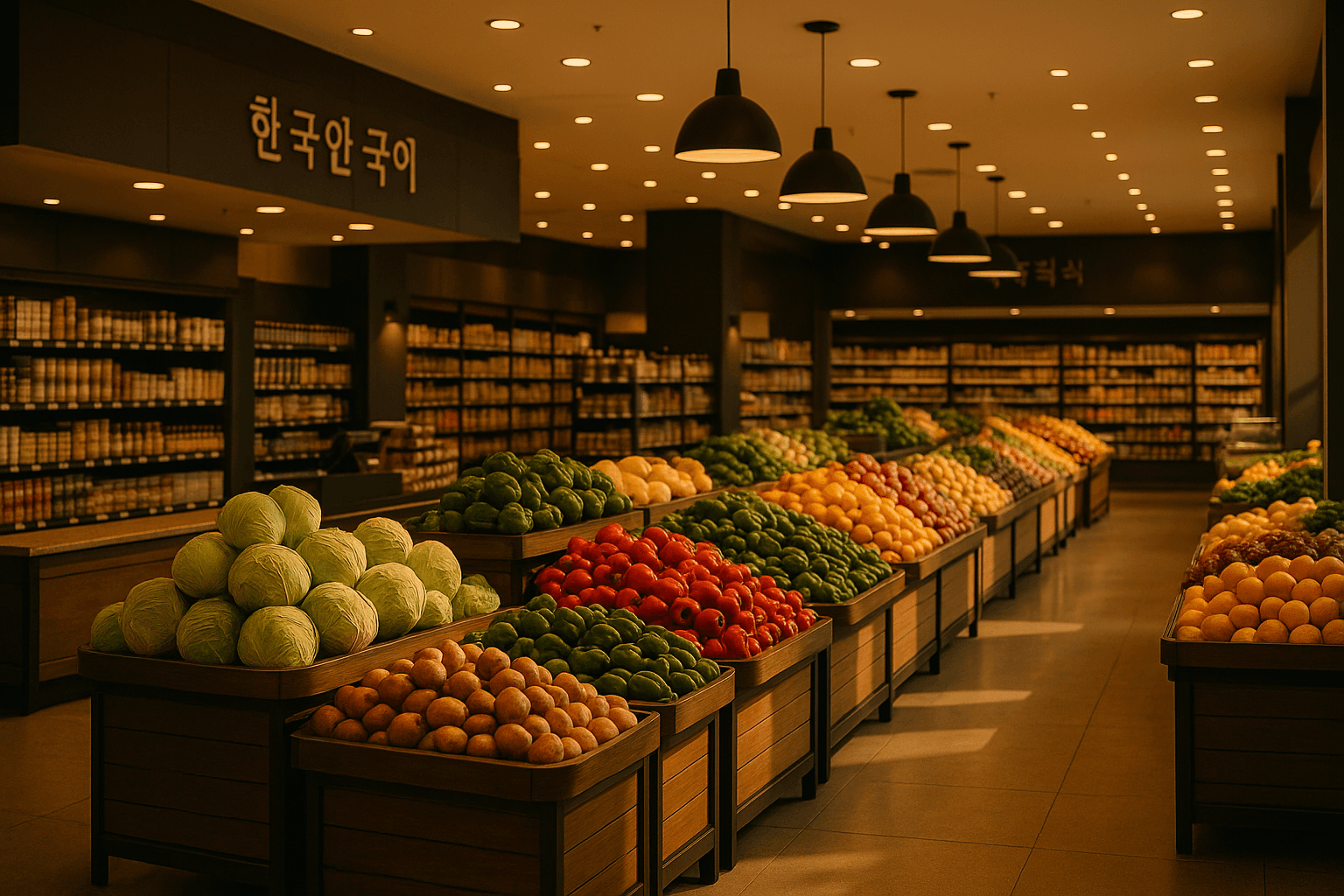
The produce section at H Mart stocks items that are difficult or impossible to find at conventional grocery stores. Korean radish (mu), perilla leaves (kkaennip), Korean chili peppers (cheongyang gochu), fresh napa cabbage for kimchi making, and a rotating selection of seasonal Asian vegetables are always available. The prices on staples like green onions, garlic, and ginger are consistently lower than Whole Foods or Trader Joe's.
The Meat and Seafood Counters
The meat counter is where H Mart particularly excels. Pre-sliced bulgogi beef, galbi (short ribs) cut cross-wise for Korean BBQ, and thinly shaved pork belly are available in quantities that work for home cooking. The marinated options — pre-seasoned bulgogi and galbi ready for the grill — save significant preparation time without sacrificing quality.
The seafood section features live tanks with crab, lobster, and various shellfish, along with a sushi-grade fish counter and a prepared sushi section. The frozen seafood aisle stocks everything from shrimp to squid to whole fish at prices well below specialty fishmongers.
Prepared Food and Banchan
The prepared food section at H Mart is a destination in itself. A refrigerated wall of banchan (side dishes) stretches the length of the aisle — kimchi in a dozen varieties, seasoned spinach (sigeumchi namul), pickled radish (danmuji), braised tofu, and marinated seaweed salad. Buying banchan from H Mart is how most Koreatown residents stock their refrigerators with side dishes without spending hours in the kitchen.
The hot food counter serves fresh kimbap (Korean rice rolls), tteokbokki (spicy rice cakes), fried chicken, and other prepared dishes that function as a quick, affordable lunch. Prices for prepared items are notably lower than ordering the same dishes at a restaurant.
The Food Court
The H Mart food court at Madang Plaza houses multiple stalls serving a range of Asian cuisines. Sit-down meals run $10 to $15, and the quality is consistently above average. This is where many Koreatown residents eat lunch on weekdays — it is fast, affordable, and the variety means you can eat something different every visit.
Galleria Market — Olympic Blvd Location, 3250 W Olympic Blvd
Koreatown Galleria Market on Olympic Boulevard is the traditional Korean grocery store that longtime K-Town residents swear by. The layout is less polished than H Mart, but the inventory runs deeper on traditional Korean ingredients.
Specialty Korean Ingredients
Galleria Market stocks the kind of specialty ingredients that serious Korean home cooks need. Doenjang (fermented soybean paste) from multiple producers, gochugaru (Korean chili flakes) in various grades, different types of rice flour for making tteok (rice cakes), and dried ingredients for making broth — dried anchovies, kelp, dried shrimp — are all available in bulk quantities at competitive prices.
The store also carries a wider selection of regional Korean ingredients than H Mart, including specialty items from specific Korean provinces that are produced in limited quantities.
The Banchan Counter
The banchan selection at Galleria Market is arguably the best in Koreatown. The counter staff prepare fresh banchan daily, and the variety extends well beyond the standard kimchi-and-spinach lineup. Look for lotus root braised in soy sauce, seasoned dried squid, marinated perilla leaves, and seasonal vegetables prepared in traditional Korean styles.
The Rice Cake Shop
Inside Galleria Market, a dedicated rice cake shop produces fresh tteok daily. Rice cakes are a staple of Korean cuisine — used in soups (tteokguk), stir-fried dishes (tteokbokki), and desserts. The fresh versions available at Galleria are noticeably better in texture than the packaged alternatives found in other stores.
The Food Court
Like H Mart, Galleria Market houses a food court where vendors serve prepared Korean food at prices that undercut nearby restaurants. Gimbap, dumplings, noodles, and rice plates are available for quick meals. The atmosphere is functional rather than atmospheric — you come here to eat well and affordably, not to linger.
Galleria Market — Vermont Location, 3500 W 6th St
The Vermont Avenue location of Galleria Market is smaller than the Olympic flagship but offers a few distinct advantages. The ready-to-eat section is particularly strong, with gimbap and dumplings prepared fresh throughout the day. Parking is more available here than at the Olympic location, which matters for larger shopping trips.
The Vermont location also carries a solid selection of imported Korean snacks, drinks, and packaged goods that make it a useful stop for quick grocery runs. The checkout lines tend to be shorter, making it the more efficient choice for weekday shopping.
Hannam Chain — 2740 W Olympic Blvd
Hannam Chain is a smaller Korean grocery store that competes on price rather than scale. The store carries all the essential Korean pantry staples — rice, gochujang, soy sauce, sesame oil, dried noodles, and basic banchan ingredients — at prices that are often lower than H Mart or Galleria.
What Hannam Chain lacks in selection it makes up for in convenience and value. For a quick weeknight grocery run where you need basics rather than specialty items, Hannam Chain gets you in and out faster than the larger stores. The parking lot is also easier to navigate, which is a genuine consideration in Koreatown.
Zion Market
Zion Market is a Korean grocery chain with a strong reputation for quality produce and competitive meat prices. The Koreatown-area location stocks a full range of Korean and Asian ingredients, with a produce section that prioritizes freshness. The pre-marinated meats — particularly the bulgogi and galbi — are well-regarded and save significant time for home cooks who want Korean BBQ flavors without the full preparation process.
Zion Market also carries a broader range of non-Korean Asian ingredients than some of its competitors, including Japanese, Chinese, and Southeast Asian products. This makes it a useful one-stop shop for residents who cook across multiple Asian cuisines.
HK Market
HK Market is the smallest of Koreatown's major Korean grocery stores, but it has a loyal following for specific categories. The dried seaweed selection is extensive and well-priced. The kimchi — both house-made and from Korean producers — is consistently good. The snack aisle stocks imported Korean snacks that are difficult to find elsewhere, including seasonal and limited-edition items.
HK Market also has hot food stalls near the entrance that serve quick, affordable meals. The tteokbokki and fried snacks are popular grab-and-go items for residents passing through on their way home.
Specialty Shops and Banchan Stores
Beyond the major grocery stores, Koreatown has numerous small shops that specialize in specific categories.
Banchan Shops
Several standalone banchan shops operate along 6th Street and Olympic Boulevard, selling prepared side dishes by weight. These shops are the Korean equivalent of a deli counter — you point at what you want, they weigh it, and you take it home. For residents who want a full spread of banchan without making it themselves, these shops are essential.
Tofu Shops
Fresh tofu shops in Koreatown produce tofu daily using traditional methods. The texture and flavor of fresh tofu — still warm, with a subtle sweetness that disappears within hours of production — is incomparable to packaged versions. Most tofu shops sell directly to consumers in small quantities.
Korean Bakeries as Grocery Supplements
Paris Baguette and Tous Les Jours function as supplementary grocery stops for bread, pastries, and sandwiches. Both chains carry fresh bread daily, and the quality is consistently above standard grocery store bakery sections. For breakfast items and quick snacks, these bakeries fill a gap that Korean grocery stores do not fully cover.
Farmers Markets Near Koreatown
For produce that extends beyond the Asian grocery store selection, several farmers markets operate within easy reach of Koreatown.
Hollywood Farmers' Market — Sundays, 8 AM to 1 PM
The Hollywood Farmers' Market at 1600 Ivar Ave is one of the largest in Los Angeles, with over 160 vendors selling produce, prepared foods, flowers, and artisan goods. It is a 15-minute drive or rideshare from Koreatown.
Echo Park Farmers' Market — Fridays, 3 PM to 7:30 PM
Located at Sunset and Logan, this smaller market is convenient for after-work shopping. The vendor selection focuses on organic produce, baked goods, and prepared foods.
The Original Farmers Market — 6333 W 3rd St
Open seven days a week, The Original Farmers Market near the Grove offers two produce stands alongside dozens of food stalls and specialty vendors. It is a short drive west from Koreatown and functions as both a grocery trip and a dining experience.
Stocking a Koreatown Kitchen
For residents of 856 S Gramercy Dr, a practical grocery routine might look like this:
Weekly big shop: H Mart or Galleria Market for produce, meat, seafood, banchan, and pantry staples. This covers the majority of your cooking needs.
Midweek quick run: Hannam Chain or the Vermont Galleria for basics you ran out of — eggs, milk, rice, green onions.
Weekend market: Hollywood Farmers' Market for fresh produce, seasonal fruit, and a change of pace from the Korean grocery store routine.
Daily supplemental: Paris Baguette for fresh bread and pastries. H Mart food court for prepared meals when you do not feel like cooking.
The walkability of the neighborhood means that most of these stops are within a 10-minute walk of your apartment. Grocery shopping becomes a series of small, manageable trips rather than a single weekly expedition — which also means fresher food in your refrigerator.
Why Grocery Access Defines Neighborhood Quality
The quality and proximity of grocery options is one of the most important and least discussed factors in choosing where to live. A neighborhood with great restaurants but poor grocery stores forces you to eat out constantly or drive to shop. Koreatown gives you both — world-class dining and world-class grocery stores, all within walking distance of 856 Gramercy.
The building amenities include the kitchen space to actually use what you buy, and the neighborhood infrastructure ensures you are never more than a few minutes from fresh ingredients.
Schedule a tour of 856 Gramercy and discover what it means to live in the center of Koreatown's food ecosystem.
Looking for an apartment in Koreatown?
Explore available units at The Gramercy — new luxury apartments with modern amenities.
View Available Units